
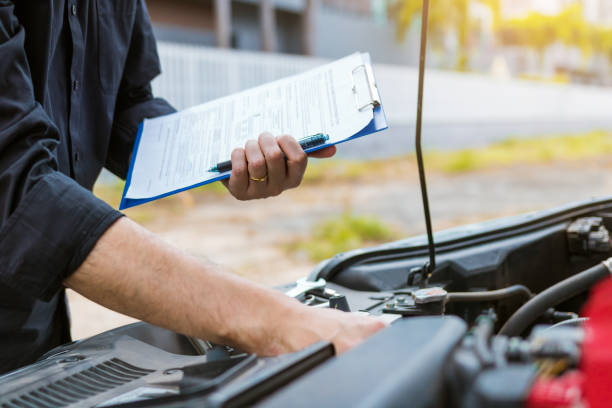
A roadworthy inspection checks whether a vehicle meets Victoria’s minimum safety standards, and failing one is more common than most drivers expect, particularly with older or well-used cars. The process can feel a bit uncertain if it’s not something you’ve been through before, especially when selling a car or transferring registration under time pressure. Understanding what’s actually being checked before booking a roadworthy certificate in Preston makes the whole process far less stressful and often helps avoid an unnecessary trip back to the workshop.
Worn or Damaged Tyres
Tyres are one of the most frequently checked items during a roadworthy inspection, and one of the most common reasons a vehicle doesn’t pass.
Tread depth needs to meet a minimum legal requirement across the tyre, and this is measured at several points rather than just a quick glance. Uneven wear, often caused by alignment or suspension issues, can also cause a tyre to fail even if parts of it still look reasonable.
Cracking, bulges, or damage to the tyre’s sidewall is also checked closely, since these can indicate a structural weakness that isn’t always obvious just from tread depth alone.
Mismatched tyre sizes or types across the same axle can be another issue, particularly on vehicles that have had tyres replaced individually over time rather than as a full set.
Brake System Issues
Brakes are checked thoroughly during a roadworthy inspection, given their direct link to vehicle safety, and issues here are a common cause of failure.
Worn brake pads or shoes, scored or warped rotors, and low brake fluid are all things an inspector will look for. A spongy or inconsistent brake pedal is often a sign of an issue that needs addressing before the car will pass.
The handbrake is also tested as part of this process, and a handbrake that doesn’t hold the vehicle adequately on a slope is a common, and often overlooked, reason for failure.
Brake lines and hoses are inspected for leaks or damage as well, since even a small leak can affect braking performance and is treated as a genuine safety concern rather than a minor issue. If you’re noticing early signs of trouble, it’s worth understanding common brake, battery, or radiator issues before they affect a roadworthy result.
Lighting and Electrical Faults
Every light on a vehicle is checked during a roadworthy inspection, and a single faulty globe is sometimes all it takes to cause a failure.
Headlights, taillights, indicators, brake lights, and number plate lights are all assessed for proper function, along with correct alignment for headlights specifically. Misaligned headlights can affect visibility for the driver and create glare for oncoming traffic, which is why alignment is checked alongside basic function.
Faults aren’t always as simple as a blown globe. Wiring issues, corroded connections, or a failing switch can also cause lighting problems, and these require a bit more investigation to properly diagnose and fix.
Because lighting faults are often quick and inexpensive to repair, they’re one of the more straightforward issues to resolve before a re-inspection, provided the underlying cause is correctly identified.
Windscreen and Visibility Issues
Visibility-related issues are checked closely, since anything obstructing a driver’s view is treated as a genuine safety concern rather than a cosmetic one.
Windscreen cracks or chips within the driver’s direct line of sight are a common reason for failure, even if the damage seems relatively minor. The specific location of the damage matters more than its size in most cases.
Wiper blades are also assessed, since worn or split blades that don’t clear the windscreen properly can affect visibility during wet weather, which is a common driving condition across Melbourne.
Window tint that’s too dark, particularly on the windscreen and front side windows, can also cause a failure, as there are legal limits on tint darkness for these areas specifically.
Suspension and Steering Faults
Suspension and steering components are inspected for wear, damage, and correct function, since both directly affect how a vehicle handles and responds to the driver.
Worn shock absorbers or struts can affect a vehicle’s stability, particularly during braking or on uneven road surfaces. Inspectors often check for excessive bounce or unusual noise, which can indicate these components need attention.
Steering components, including ball joints and tie rods, are checked for excessive play or looseness. Excessive movement in these parts can affect how predictably a vehicle steers, particularly at higher speeds.
These issues aren’t always noticeable during everyday driving, which is part of why a proper inspection matters. Many suspension and steering faults develop gradually, without an obvious symptom until they’ve become more significant.
Exhaust and Emissions Problems
Exhaust system issues are checked partly for safety and partly for environmental compliance, and problems here are another common reason for failure.
Excessive noise, often caused by a damaged or corroded exhaust, is one of the more obvious issues an inspector will pick up on. Leaks in the exhaust system can also allow fumes to enter the cabin, which is treated as a genuine safety concern rather than a minor fault.
Visible corrosion or damage to the exhaust system, particularly near mounting points, is checked as well, since a poorly secured exhaust can become a bigger issue over time.
These issues are usually straightforward to identify during a general inspection and can often be resolved without extensive work, provided they’re caught before they cause further damage to the system.
Understanding what’s being checked makes a roadworthy inspection far less daunting, and the team at Albert ST Automotive is happy to talk through any concerns before booking one in. We proudly services drivers across Preston, Coburg, Coburg North, Northcote, Thornbury, Reservoir, Heidelberg, Heidelberg West, and Bundoora.
For bookings or enquiries, contact 0394701052 to get your vehicle assessed properly the first time.