
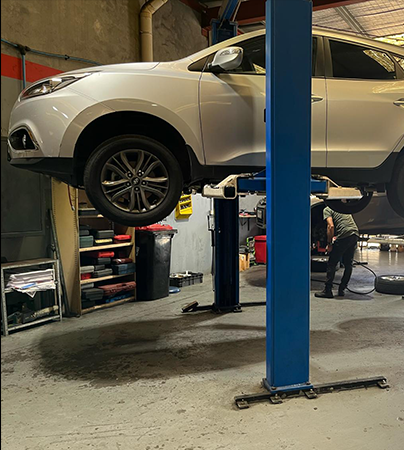
Every car experiences some wear and tear over time, and not every squeak, stiffness, or slight change in performance means something is seriously wrong. The tricky part is knowing where normal wear ends and a genuine problem begins, particularly if you’re not familiar with what’s typical for your vehicle’s age or mileage. Professional car repairs in Preston may not always be necessary when a minor change first appears, but ignoring a genuine issue for too long can allow it to develop into a much bigger repair.
Unusual Noises Vs Normal Ageing Sounds
Cars naturally get a little noisier as components age, and not every sound is a sign of a developing fault.
A faint rattle from an interior trim panel, for example, is usually cosmetic and unrelated to how the car actually runs. Similarly, tyres can sound slightly different on coarser road surfaces without indicating a problem with the tyre itself.
The distinction usually comes down to consistency and change. A noise that’s been present for a long time without getting worse is generally less concerning than a new sound that appears suddenly or gradually intensifies.
Noises linked to braking, steering, or the engine deserve more attention than general cabin noise, simply because these systems are more directly tied to safety and reliability. If in doubt, it’s always worth having a new or changing noise checked rather than assuming it’s nothing.
Gradual Performance Changes
Some changes in how a car drives happen so slowly that they’re easy to miss, which makes them harder to judge than a sudden, obvious fault.
A slight reduction in fuel efficiency, marginally slower acceleration, or a gearbox that shifts just a touch less smoothly than it used to can all fall into this category. On their own, none of these might seem worth acting on.
The issue is that gradual changes often reflect a developing problem that hasn’t yet become severe enough to be obvious. Components like spark plugs, filters, or sensors can degrade slowly, quietly affecting performance well before triggering a warning light.
This is part of why regular servicing matters, since a mechanic checking the car periodically is more likely to notice small, gradual changes than a driver who experiences the car’s performance every single day.
Visible Wear That’s Still Within Normal Range
Not all visible wear signals an urgent repair. Brake pads wearing down, tyres losing tread gradually, or wiper blades becoming slightly less effective are all part of a component’s expected lifespan.
The key question isn’t whether wear exists, since it always will over time, but whether that wear has reached a point where the part is no longer performing safely or effectively. A brake pad with plenty of material left isn’t a repair issue. One nearing its wear indicator is.
This is where a bit of knowledge helps drivers avoid two common mistakes: replacing parts unnecessarily early or waiting too long because the wear “still looks fine” at a glance.
A mechanic assessing wear against manufacturer specifications, rather than just visual impression, gives a far more accurate read on whether something genuinely needs attention yet.
When a Symptom Signals Something Bigger
Sometimes a seemingly minor symptom is actually an early indicator of a larger, related issue rather than an isolated concern.
A slight pull to one side while braking, for instance, might seem minor but can point to uneven brake wear or a developing suspension issue. A small vibration through the steering wheel could be an early sign of wheel balance or alignment problems, rather than something to dismiss as road texture.
These are the situations where waiting tends to be the more costly choice, since minor symptoms like this often worsen gradually rather than resolving on their own.
Recognising the difference between a truly isolated, minor symptom and one that hints at something more connected is genuinely difficult without hands-on experience, which is exactly why a proper inspection matters more than guesswork.
The Role of Mileage and Vehicle Age
Wear expectations shift considerably depending on a vehicle’s age and mileage, and this context matters when judging whether something needs attention.
A slightly stiffer clutch or a bit more road noise might be entirely normal in a car approaching 150,000 kilometres, while the same symptoms in a much newer vehicle would be worth investigating more closely.
Manufacturers often provide general guidance on expected component lifespans, though real-world conditions, like frequent short trips or stop-start traffic, can accelerate wear beyond these estimates.
Understanding this context helps set realistic expectations. An older vehicle will naturally need more attention over time, but that doesn’t mean every symptom is something to worry about immediately.
When It’s Time to Get It Checked
As a general rule, any symptom connected to braking, steering, or unusual engine behaviour is worth having checked promptly, regardless of how minor it seems.
For everything else, a useful guide is whether a symptom is new, worsening, or inconsistent with what’s expected for the vehicle’s age and mileage. Symptoms fitting any of these criteria are generally worth a proper look rather than being left to resolve on their own.
Experienced mechanics in Preston are used to helping drivers work through exactly this kind of uncertainty, assessing whether something is genuinely a repair issue or simply expected wear that can wait until the next scheduled service.
When unsure, it’s almost always better to ask. A quick inspection is far less costly than an issue that’s been left to develop unnoticed.
Not sure whether that noise or niggle is something to worry about? The team at Albert ST Automotive is happy to take a look and give an honest answer either way. We proudly service drivers across Preston, Coburg, Coburg North, Northcote, Thornbury, Reservoir, Heidelberg, Heidelberg West, and Bundoora.
For bookings or enquiries, contact 0394701052, or visit the workshop on Albert Street, Preston, to get it checked properly.