
A brake inspection and a brake service are two different things, and knowing which one your car actually needs can save you both time and money. Many drivers use the terms interchangeably without realising that one is a diagnostic assessment and the other is the hands on work that follows from it. Getting that distinction wrong can mean paying for repairs that are not yet necessary or, on the other end, walking away from a check thinking everything is fine when it is not. If your vehicle is due for a brake service in Preston or something has recently changed in the way your car brakes, understanding what each option genuinely involves helps you make the right call without overspending or putting your safety at risk.
What Is a Brake Inspection?
A brake inspection is a diagnostic assessment. Its entire purpose is to evaluate the current condition of your braking system and identify whether anything needs attention, without necessarily carrying out any repairs or replacements at that point.
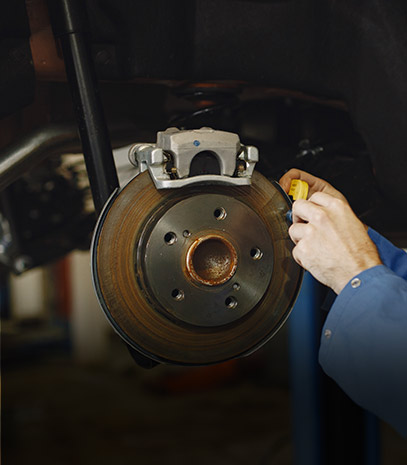
During a brake inspection a qualified mechanics will examine the key components of your braking system both visually and physically. This includes measuring brake pad thickness to determine remaining wear life, checking rotor condition for scoring, grooving or uneven wear patterns, assessing calliper operation to confirm each one is moving freely and applying pressure evenly across the disc, checking brake lines and hoses for signs of cracking, corrosion or leaking, and evaluating brake fluid condition and level.
The outcome of a brake inspection is information. You leave the workshop knowing exactly where your braking system stands, what is in good condition, what is approaching the end of its service life, and what needs immediate attention. No parts are replaced during an inspection unless the assessment leads directly into a service. It is purely an evaluation.
Most reputable workshops include a brake inspection as part of every routine car service in Preston. If yours does not, it is worth confirming before you book whether a brake check is built into the service or whether it needs to be requested separately.
What Is a Brake Service?
A brake service goes considerably further. Rather than simply assessing the braking system, it involves carrying out the maintenance or repair work that the inspection has identified as necessary.
Depending on what the assessment finds, a brake service may include replacing brake pads on one or more axles, machining or replacing rotors that have worn beyond their minimum thickness or developed uneven contact surfaces, rebuilding or replacing callipers that are seizing or leaking, replacing brake fluid that has deteriorated or absorbed moisture beyond acceptable levels, and renewing worn or cracked brake hoses and lines.
A brake service is not a fixed checklist that runs the same way on every vehicle. It is entirely determined by what your specific car needs at that specific point in time. A vehicle with pads sitting at fifteen percent wear needs a very different scope of work from one where the pads have worn through to the metal backing plate and begun scoring the rotor. The inspection is always what determines the scope of the service, which is why the two are sequential rather than interchangeable.
How Do You Know Which One You Need?
The simplest way to think about it is this: an inspection is where you start when you are not sure, and a service is where you end up when the assessment tells you something needs fixing.
For most drivers a brake inspection is the right first step. If your car has not had a proper brake assessment in the last twelve months, if you are about to buy or sell a vehicle and want a clear picture of its condition, or if something feels marginally different but not dramatically wrong, an inspection gives you the information you need without committing to repair work that may not yet be necessary.
A brake service becomes the appropriate course of action once that information exists and points to a problem. When worn components have been identified, when the braking system is producing consistent noise, when the pedal feel has changed, or when a warning light has appeared and stayed on, the inspection has already done its job and what your vehicle needs next is the repair work itself.
What is worth understanding is that in most real world visits the two happen in sequence rather than as separate choices. A driver notices something feels slightly different, brings the car in, and the mechanic works through a full assessment before recommending anything. That process means every repair that follows is based on actual findings rather than a standard checklist applied the same way regardless of what the car needs. It is the most straightforward way to make sure you are spending on what your vehicle genuinely requires and nothing beyond that.
Why Brake Condition Matters in Everyday Driving
The type of driving most people do every day is harder on brakes than many drivers account for. Regular commuting through built up areas, navigating busy intersections, and dealing with peak hour traffic means your braking system is working continuously throughout every trip, far more intensively than it would during a long open road run covering the same distance.
The problem with this kind of gradual wear is that it happens quietly. Frequent low speed braking erodes pad material steadily without producing obvious symptoms until the pads are well past their recommended replacement point. By the time a noise or a change in pedal feel becomes noticeable, the wear may already have extended to the rotor surface. Regular brake inspections at every service interval are the most reliable way to stay ahead of that progression and keep what should be a straightforward pad replacement from becoming a considerably more expensive job.
What Happens When Brake Problems Are Left Too Long?
This is where the cost of avoidance becomes very direct. Brake pads replaced when they reach the recommended minimum thickness are a straightforward and relatively contained job. Brake pads left beyond that point wear through to the metal backing plate, which then scores directly into the rotor surface with every application of the brakes.
At that stage the rotor, which would otherwise have lasted considerably longer, needs to be either machined back to a usable surface or replaced entirely. What started as a pad replacement becomes a pad and rotor replacement, often at close to double the original cost. In more severe cases calliper damage occurs as well, pushing the total further again.
The braking system is one area of vehicle maintenance where the gap between addressing something promptly and leaving it too long has a measurable financial consequence every time. More importantly it has a safety consequence. A braking system that is significantly worn does not stop your vehicle as effectively as one that is properly maintained, and the difference becomes most apparent at exactly the moment you need it most.
Book a Brake Service in Preston Today
Whether your car is showing clear warning signs or you simply want to know where things stand, Albert Street Automotive give you a straight answer. As a family run workshop with fully qualified mechanics, the team carries out thorough brake inspections as part of every car service and repairs in Preston and provides honest recommendations based solely on what your vehicle actually needs. No pressure, no unnecessary work, no surprises on the invoice.
You can visit our Google Business Profile to read reviews and learn more about our services. We focus on honest advice and quality workmanship. Call us at (03) 9470 1052 today to book your brake inspection or service and keep your vehicle safe and performing at its best on the road.