
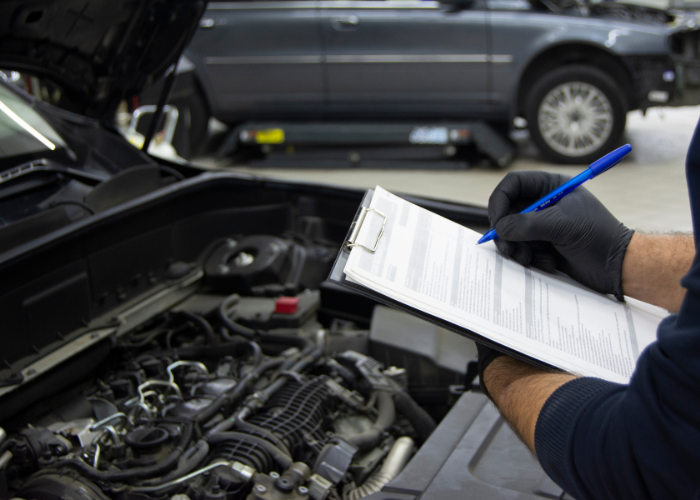
Getting a roadworthy certificate in Preston is one of those tasks most drivers only think about when they absolutely have to, whether selling a car, re-registering an unregistered vehicle, or responding to a defect notice. And then the inspection comes back with a list of items that need attention, and suddenly what felt like a formality turns into an unexpected conversation about repairs.
Tyres
Tyres account for more roadworthy failures than any other single area. The legal minimum tread depth in Victoria is 1.5mm across the full width of the contact area, but a tyre tread check during an inspection goes well beyond depth alone. Inspectors also assess sidewall condition, uneven wear patterns, visible cracking, bulging and any structural exposure.
Uneven wear deserves particular attention. A tyre worn heavily on one edge is usually a symptom of a wheel alignment or suspension issue rather than simply an ageing tyre. Replacing the rubber without addressing the underlying cause means the new tyres will wear the same way and present the same problem at the next inspection.
How it is resolved: Tyres below the legal limit or showing structural damage are replaced. Where uneven wear is present, a wheel alignment is carried out alongside the replacement to correct the root cause.
Brakes
The braking system receives close scrutiny during any vehicle safety inspection because it is directly linked to stopping distance and occupant safety. Inspectors assess brake pad thickness, rotor condition and minimum thickness compliance, brake fluid level and condition, handbrake effectiveness, and the integrity of brake lines and hoses.
What many drivers do not realise is that brake fluids absorb moisture over time. This lowers its boiling point and affects braking performance under sustained use, something that is not always apparent during normal daily driving but becomes relevant in an emergency. Old or contaminated fluid is assessed as a genuine safety concern.
Brake hoses are also worth understanding. A hose can show external cracking or swelling well before it causes any noticeable change in pedal feel. By the time a driver registers a difference, the hose is often well past the point where it should have been replaced.
How it is resolved: Worn pads and rotors are replaced to specification. Brake fluid is flushed and renewed. Deteriorated hoses or lines are replaced as part of the repair.
Lights
Lighting failures are among the most avoidable reasons a car fails an inspection and among the easiest to check at home before booking. Headlights, tail lights, brake lights, indicators, reverse lights, number plate lights and hazard lights are all assessed. A single failed globe is enough to cause a failure regardless of the overall condition of the vehicle.
Yellowed or fogged headlight lenses are also assessed during a roadworthy inspection. Heavily oxidised lenses reduce light output significantly even when the globe itself is in working order, and this is considered a safety concern under car safety standards.
How it is resolved: Failed globes are replaced and any wiring faults are diagnosed and corrected. Headlight lenses that are heavily degraded are restored or replaced depending on the extent of the oxidisation.
Suspension
Suspension issues are not always obvious from the driver’s seat. Wear in ball joints, tie rod ends, control arm bushings and shock absorbers tends to happen gradually, with the change in handling occurring slowly enough that many drivers adapt to it without registering it as a problem.
During a roadworthy inspection, suspension components are physically assessed for excessive play, deteriorated bushings, leaking shock absorbers and structural integrity. A vehicle that feels acceptable to drive can still present failures if components have worn beyond the tolerances set under vehicle safety standards.
The broader implication matters here. Worn suspension affects tyre wear, braking stability and the vehicle’s behaviour in emergency situations. A car that handles adequately in everyday conditions can respond very differently when a sudden manoeuvre is required.
How it is resolved: Worn components are replaced: ball joints, tie rod ends, bushings and shock absorbers, and a wheel alignment are carried out afterwards to restore correct geometry.
Windscreen and Glazing
Windscreen damage is assessed based on both size and location. A chip or crack within the driver’s direct line of sight is a failure regardless of how small it appears. The same damage in a less critical area of the glass may be acceptable depending on its size. Wiper blades that streak or skip are also assessed, as is washer system operation.
How it is resolved: Chips within repairable size limits are filled. Cracks beyond repair or damage in critical zones require full windscreen replacement. Wiper blades are replaced where they are no longer clearing the screen effectively.
Steering
Excessive play in the steering, worn rack components or power steering fluid leaks is all grounds for a failure. Like suspension wear, steering deterioration tends to happen gradually and can be easy to adapt to without recognising it as a problem worth investigating.
How it is resolved: Worn steering components are replaced and the system is checked for correct operation and fluid integrity before the vehicle is cleared.
The Case for a Pre-Inspection Check
The most practical approach to obtaining a roadworthy certificate is to have a pre-inspection assessment carried out by qualified mechanics in Preston before the formal inspection is booked. This helps identify likely failure points in advance, allows repairs to be completed without time pressure, and avoids the cost of a re-inspection for issues that could have been detected earlier.
A mechanic familiar with what inspectors look for can assess the vehicle systematically, including the tyres, brakes, lights, suspension, steering, glazing, and safety components, and provide an honest indication of what the vehicle is likely to need before it goes in for inspection.
Albert ST Automotive is VicRoads-licensed to carry out roadworthy inspections and issue certificates. Where repairs are identified during the inspection, whether brake repairs in Preston, tyre replacement, suspension work or lighting, the work is completed on site so most customers leave the same day with their certificate in hand.
Also, we proudly support drivers in nearby suburbs including Reservoir, Heidelberg, Northcote, Thornbury, and Coburg. Call us on 03 9470 1052 today to book your inspection and get your vehicle ready for the road.